Montessori Practical Life Activities
Here are some fun Montessori inspired activities to do with your two-year-old. I did these with my two-year-old twins, and they had such a blast.
Montessori practical life activities help children develop coordination, concentration, independence, and fine motor skills.
Montessori Pouring Activities
Pouring activities involve a child transferring a substance from one container to another. These activities increase in difficulty, starting with dry materials and progressing to liquids.
Examples:
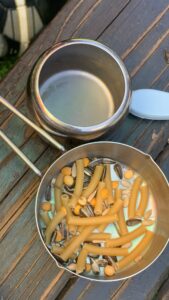
- Dry Pouring: Pouring beans, rice, or beads between two small pitchers or bowls.
- Water Pouring: Pouring water from a small pitcher into a glass, using a sponge or small towel to manage spills.
- Funnel Pouring: Using a funnel to pour a dry substance into a container with a narrow opening.
Benefits:
- Fine Motor Skills: Strengthens hand and finger muscles and improves dexterity.
- Hand-Eye Coordination: Refines the precise movement required to pour without spilling.
- Concentration & Focus: Encourages a sustained attention span as the child focuses on the task.
- Independence: Provides a practical, real-life skill the child can use daily (e.g., pouring their own drink).
- Problem Solving: The child learns to manage spills and adjust their pouring speed and angle.
Montessori Scooping Activities
Scooping activities focus on using a scoop, spoon, or ladle to transfer materials. Like pouring, these typically involve dry goods.
Examples:
- Spoon Scooping: Using a small spoon to transfer beans from a large bowl to an ice cube tray or a series of smaller bowls.
- Ladle Scooping: Using a ladle to transfer small balls or water beads from one bowl to another.
- Tongs/Tweezers: As an extension, using tongs or large tweezers to transfer items, which further refines the pincer grasp.
Benefits:
- Hand-Eye Coordination: Improves accuracy in targeting the destination container.
- Fine Motor Skills: Develops the muscles used for using utensils and eventually writing (pre-writing skills).
- Order & Organization: The structured nature of the activity provides a sense of order.
- Concentration: Focuses the child’s mind on the delicate task of scooping all material.
- Practical Skills: Teaches the fundamental skill of using a spoon for self-feeding.
Montessori Gluing Activities
Gluing activities allow children to engage in art and craft while practicing precision and control.
Examples:
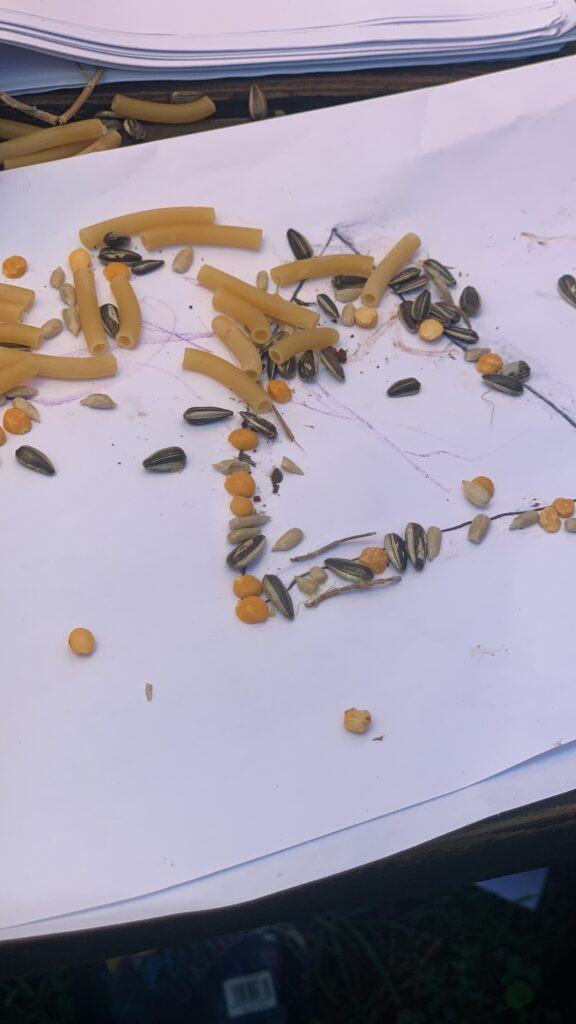
- Dot Gluing: Using a small paintbrush to place a single dot of glue inside outlines on a paper, then placing an object (e.g., a sequin, small piece of paper) onto the dot.
- Collage Making: Gluing various pre-cut shapes or natural materials (leaves, petals) onto a larger piece of paper to create a collage.
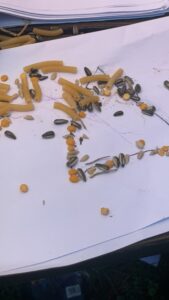
- Gluing Lines: Following a drawn line with a thin application of glue using a paintbrush.
Benefits:
- Fine Motor Control: Develops precision in using a paintbrush to apply a controlled amount of glue.
- Creativity & Self-Expression: Allows the child a medium to express themselves artistically.
- Concentration: The detail-oriented nature of applying glue neatly demands focus.
- Spatial Awareness: Teaches awareness of where the glue needs to go and how much is needed.
- Sense of Accomplishment: The child can create a finished product they are proud of, boosting self-esteem
Tips
- Remember to keep an eye on your child as small pieces maybe choking hazards if left unattended.
- We used common household items for pouring and gluing. We used macaroni, lentils, sunflower seeds and popcorn seeds.
- We used twigs from rosemary for sensory gluing. And child friendly or non-toxic wood glue.
- I added a spoon for scooping which also teaches them to feed themselves.
- Be sure to let them sit on a mat for easy clean up after.
- And let them wear some old clothes you won’t mind getting dirty or messed with glue.
- Remember it is not about perfection but about practice and having fun.
Shalom,
Following God’s Ways,
Natasha Chetty.