How to Reduce Electricity Usage: Practical, Everyday Energy-Saving Tips That Actually Work
If you want to cut your electricity bill without sacrificing comfort, you’re about to learn the simplest, most realistic ways to do it. No need to do expensive upgrades, just smarter habits, mindset changes and small adjustments that add up fast.
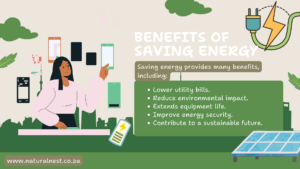
Reducing electricity and energy usage offers several important benefits:
- Save Money: Lowering your energy usage directly reduces your monthly electricity bills, helping you keep more money in your pocket.
- Environmental Protection: Using less electricity helps decrease greenhouse gas emissions, air pollution, and depletion of natural resources. It helps to lower your carbon footprint.
- Increased Sustainability: Energy-efficient habits support a greener, more sustainable planet for future generations.
- Enhanced Appliance Lifespan: Reducing usage puts less strain on your devices, making them last longer and saving replacement costs.
- Improved Comfort and Health: Efficient heating, cooling, and ventilation can create a more pleasant and healthier home environment.
- Boosted Property Value: Energy-efficient homes are attractive to buyers and can command higher prices on the property market.
These tips can reduce your bill by 20–45% depending on your home and lifestyle.
1. Kitchen & Appliance Efficiency
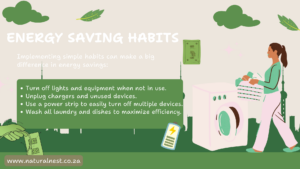
- Unplug small appliances (microwave, kettle, toaster, blender, coffee maker, air fryer) when not in use to stop phantom power.
- Use multi-use appliances: e.g., Instant Pot, Ninja Foodi, air fryer/toaster oven combos reduce the number of devices plugged in.
- Cook on the fire or braai (safely): Reduce electricity by making stews, curries, casseroles, beans, samp, boiling water, or baking bread outdoors.
- Use a Wonderbag or heat retention cooker: Heat food for 10–15 minutes, then insulate in a Wonderbag to finish slow-cooking without electricity or gas. Good for stews, rice, beans, and curries (cuts cooking energy by 70–90%).
- Cook smart: Use lids, match pot to burner, let food finish cooking on residual heat, batch cook to reduce appliance cycles.
- Consider hand powered appliances, gadgets and electronics.
2. Lighting
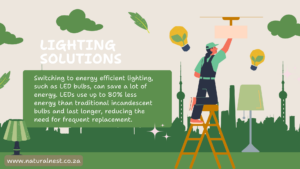
- Switch all bulbs to LED for 80% less usage; don’t forget closets, bathrooms, and hallways. Use solar-charged lights outside.
- Turn off lights when not in use.
- Use natural light with open curtains.
- Install motion sensors in strategic places and outdoors.
3. Heating & Cooling
- Use windows strategically:
- Morning: Open up for cool air.
- Afternoon: Close/blind windows to trap coolness or keep out heat.
- Winter: Close before sunset, open during sunny hours, close again before dark.
- Wear warmer clothing in winter: Socks, hoodies, blankets, warm gowns, indoor slippers before heaters.
- Ceiling fans over AC:
- Summer: Spin counterclockwise.
- Winter: Spin clockwise.
- Zone heating: Heat only the rooms in use.
4. Geyser (Water Heater) Efficiency
- Geyser timer: Set to run just before peak shower times.
- Lower the temp to 120°F / 49°C.
- Insulate exposed pipes.
- Fix hot water leaks immediately.
5. Use a Heating Blanket Instead of a Heater
- Heating blankets use 90–95% less energy.
- Pre-warm bed, set low/medium, switch off main heater earlier.
6. Laundry & Dishwashing
- Wash with cold water.
- Run full loads, air-dry when possible, and use eco mode.
- Reuse clothes like jeans again if not thoroughly dirty.
- Take care of your clothing.
- Buy quality, long-lasting, natural material clothing
7. Refrigerator & Freezer Habits
- Keep fridge ¾ full for best efficiency.
- Don’t overload or put hot food straight in.
- Clean coils twice a year.
- Defrost freezer regularly.
- Keep seals tight.
8. Electronics
- Turn off completely (not just standby).
- Lower screen brightness, use sleep mode.
- Charge devices during the day and unplug when full.
9. Home Structure & Airflow
- Seal windows & doors with weatherstripping/draft stoppers.
- Rearrange furniture so vents aren’t blocked.
- Add insulation to attic/ceiling for long-term savings.
10. Water Saving = Electricity Saving
- Shorten showers by 2 minutes.
- Install low-flow shower heads.
- Turn off the tap while soaping/shaving.
11. Ventilation
- Turn off bathroom fans after 5–10 minutes.
- Use dehumidifier if needed for climate.
- Add air filters to your walls.
- Open windows and doors after taking a bath or shower.
12. Smart Habits
- “One switch off” rule whenever you move rooms.
- Run appliances during off-peak hours.
- Keep fridge/freezer organized for quick access.
- Clean filters (AC, vacuum, range hood) regularly.
13. Outdoor & Forgotten Energy Wasters
- Switch to solar or LED floodlights outside; add motion sensors.
- Cook outdoors when possible: Cuts kitchen cooling, saves energy.
- Use a Wonderbag/heat-retention bag often.
- Close interior doors to retain heat/cool.
- Use mirrors to bounce natural light.
- Clean behind appliances often to prevent dust buildup.

14. Embrace Solar-Powered Appliances
If you want to take your energy savings to the next level, especially in sunny climates. Consider switching key household devices to solar power or solar-charged versions. This lets you use free, renewable energy for many daily needs and massively reduces electricity costs.
- Solar-charged outdoor lights: Use solar garden lights, security lights, or pathway markers
- Solar water heaters: Great for long-term savings; heat water during daylight and store it for evening use.
- Solar-charged appliances.
- Solar chargers for devices: Power banks, phone chargers, and camping lanterns can all run off solar panels, perfect for outdoor use or during outages.
- Solar fans: Small portable fans (desk or window fans) are available with built-in solar panels, excellent for day cooling without grid power.
- Solar-powered security systems: Cameras and gate openers now come in solar versions for worry-free operation.
- Portable solar power stations: These can run laptops, modems, LED lights, or even a small fridge for hours — ideal for load shedding, emergencies, or camping.
Pro Tips:
- Use solar during peak sunlight hours to charge or run devices, then use stored grid power in the evening.
- Place solar panels/chargers where they get maximum direct sun (north-facing is best in southern hemisphere homes).
- Combine solar lights with motion sensors for added efficiency and security.
Bottom line: With just a few affordable solar gadgets or upgrades, you can shrink your electricity bill even more and make your home greener, more resilient, and energy-independent.
Final Thoughts
Saving electricity isn’t about discomfort; it’s about smart, mindful habits and efficient use of what you already have. By applying 5–10 of these tips, most households see a visible drop in their electricity bill within weeks. Remember it starts with a change on mindset, small daily changes that are consistent and overtime habits that build up to make a difference.
Shalom,
Following His Ways,
Natasha Chetty.