Self-sufficiency and Sustainable living in the Bible.
Being self-sufficient means that over time, we save lots of money, with the ongoing influx of grocery store prices. We eat healthier organic food. We choose what is best and right for our families. We avoid toxins and plastic pollution, which helps planet Earth. We leave a legacy, an inheritance of a clean earth to our children.
We are following an example of how people in the Biblical times lived. We are caring for our health and the health of our environments and of Earth. Being self-sufficient means that we have a say in what we use in our homes, when we use or do not use it and are not dictated by a random person choosing to switch us off for whatever reason. Being self-sufficient means that we thrive and live peacefully.
Is Self-sufficiency biblical?

For many years, I have been striving to live self-sufficiently and sustainably. Everything I feel and how I live my life I try to correspond with stories from the Bible with the help of the Holy Spirit. God interprets the Bible in a language I can understand and with the circumstances revolving around my life. So, the question today is whether people from the Bible were self-sufficient or lived sustainably.
The short answer is yes. So, let’s dig in:
Off-grid living, or self-sufficiency means that you grow your own food, have your own source of water and electricity from wind or sun etc.
Many people in the Bible lived nomadic lives.
For instance,
- Abraham, when God told him to live and go where God takes him. (Hebrews 11:8)
- Isaac (Hebrews 11:9)
- Jacob (Hebrews 11:9)
- Jabal (Genesis 4:20)
- Elisha (2 Kings 4:8-9)
- The Israelites led by Moses to go to the promised land (Joshua 5:6)
- Cain
- John the Baptist (Matthew 3:1)
- David (1 Samuel 27:2) David kept running away from Saul, till he found a place in one of the cities of Gath (Ziklag)
- Jesus moved around from place to place (Matthew 8:20) etc.
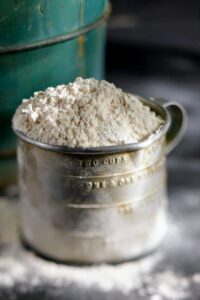
Nomadic lives meant that they did not own much. Physical, permanent buildings did not hold much. They moved around with their families and animals, living in tents to make safe dwellings and lived off the land for food.
Nomadic lives in this day and age are not entirely possible. But we can learn from them.
Let’s go back to the beginning.
God created Adam and Eve and the Garden of Eden, the first example of HOME in the Bible. Here, God provided everything for Adam and Eve to live happy, safe, fulfilled lives. The Garden of Eden had everything needed to live, thrive, and enjoy a life full of abundance.
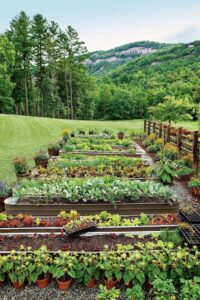
The Garden of Eden had
- Light (Genesis 1:16)
- Sources of water (Genesis 2:10 -14)
- Food (Genesis 1:27 – 30) Plants, trees, all sorts of animals (crawling, beasts, sea creatures)
- Shelter (a place for Adam to sleep, Genesis 2:21)
- Plants were used as medicine
When Adam and Eve left the Garden of Eden after their fall, they had used leaves as clothing (Genesis 3:7) but God made them clothes from animal skins (Genesis 3:21). Eve had sons Cain and Abel, Abel was a shepherd, Cain was a Gardener. Cain was cursed to become a fugitive after he killed his brother.
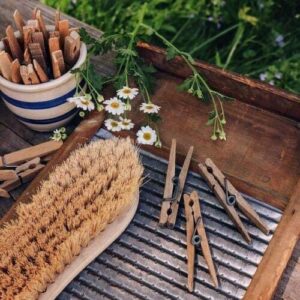
Bible times had no electricity, no running water in their homes, no appliances and gadgets to make life easier and no grocery store right next door to obtain products (there is mention of a market far away for buying and bartering/trading of precious goods).
Riches or wealth were considered in how many animals you had, family and community, precious stones, purple linen, scarlet and wool, how much land you possessed (Genesis 13:2, Genesis 13:5- 6, 2 Chronicles 14-17, Acts 16:14, Proverbs 31:21-22, Joshua 22:8).
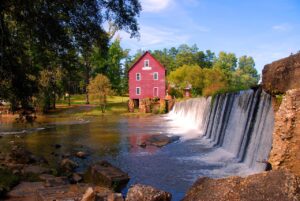
Water: People throughout the Bible obtained water from springs, fountains, wells etc. They carried water bottles made from clay or asked the local women to help them source water from wells. (Exodus 2:16, John 4:7, Genesis 16:7). They also harvested rainwater.

Food: Food was hunted and fished then cooked on an open fire. They collected and stored food. (Genesis 6:21, my guess is it had to be preserved some way because electricity and fridges were not there back then, Jews fermented, salted, smoked and dried food).
Wild / Raw Honey was also eaten for food. (Proverbs 24:13- 14, Matthew 3:4, Psalm 119:103, Song of Solomon 4:11, Ezekiel 3:3, Revelation 10:9-10, Proverbs 25:16)
Food was also made without yeast (unleavened bread) which lasted longer and stayed longer at room temperature. Food was cooked on open fires. (Genesis 18:6, Genesis 19:2-3).

They had gardens, land, fields and vineyards for plants, vegetables, trees. Crops like barley, wheat, olives for oil (2 Chronicles 2:10) was grown in fields. Root cellars (storehouses) were used to store produce from the garden/land (Genesis 41:56).
Pots were made from clay or cast iron.
People drunk lots of water and milk (Genesis 18 :7).
Oils and herbs:
Olive oil and herbs were used for healing and cleansing. (Luke 10:33, Luke 7:37)
Olive oil was used for beauty. (Esther 2:12, Proverbs 7:17)
Olive oil was used for cooking. (1 Kings 17:12)
Pure Oils/herb oils were used for cleansing, rituals, medicine, anointing, oiling shields, perfumery, incense, given as gifts and as a sign of kingship etc.
Light:
Sun during the day and the moon and stars at night.
Candles and Olive oil in lamps was also used at night (Matthew 25:8-10).
Animals:
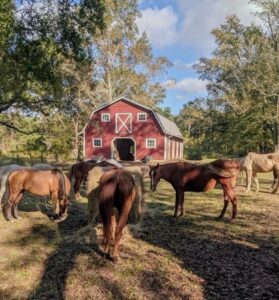
They reared animals that were used for traveling, animal power, food, bartering etc (donkey, horse, ox, sheep, etc). Animals were also messengers (Dove- Genesis 8:11, Matthew 3:16-17, Donkey- Numbers 22:28-30).
Shelter: They were skilled in craftsmanship Tubal-cain (Genesis 4:22, Exodus 35:31-35, 2 Chronicles 2:13-16). This craftsmanship was necessary for the building of homes, churches etc. Homes were mostly made from wood, clay, and other natural resources. (Exodus 12:7, 2 Chronicles 2:7-8)
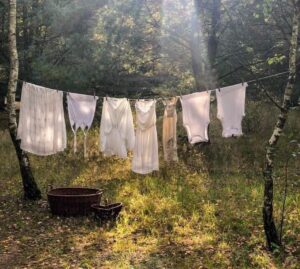
Clothing: Clothing was handmade from natural fibres (flax, linen, wool, animal skin/leather and possibly silk) and was long-lasting (Luke 2:7, Proverbs 31:21-22, 1 Samuel 2:18-19, Proverbs 7:16). The robe Hannah made for her son lasted a whole year until she made another and took it to him when she and her husband went for their yearly sacrifice. I guess that they could knit, sew, mend, crochet etc.
Babies wore cloth diapers (Luke 2:7)
Linen was also used for décor.
Community:
People in the Bible always moved in groups, family and relied on communities. Communities bartered, shared responsibilities and resources, passed down knowledge from generations (1 Titus 2:3-4), sang together (Exodus 15:20), told stories, spread the gospel, and encouragement (Luke 1:41-46). Women went in groups to fetch water and socialize with others.
They wrote letters to far friends and family, which was passed on by messengers. They gave gifts of high value to each other. They washed each others feet. (Genesis 18:4)
In conclusion; we can learn from Bible times how to be self-sufficient. We use less to no electricity by using gas or propane or wood-fired stoves. We dig boreholes or wells or find natural sources of water.
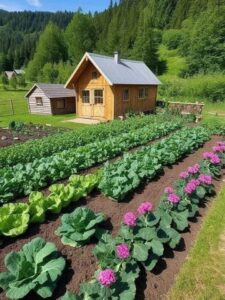
We plant gardens with fruit trees, plants, medicinal herbs etc. We use and purchase things we need with intention and careful consideration. We use natural resources for food, water, light, clothing, and clean air wisely. Animals are good friends.
We teach the next generation and form Godly relationships etc. Using less plastic that is bad for the planet. We steward the Earth. Most importantly we pray and read the Bible for direction on how to live our lives as God first made it to be in the Garden of Eden.
Let us build Eden homes together.
“Garden of Eden” book will be coming soon, a practical guide to loving sustainably in a modern fast paced era.
Shalom and Thank you Jesus.
Following His Ways,
Natasha Chetty.